American National Park Destinations USA: Ultimate Guide
Evaluating the geographic, ecological, and administrative dimensions of public lands requires a sophisticated understanding of federal conservation history, regional ecosystems, and modern visitor management frameworks. However, surface-level travel guides and mainstream tourism media frequently reduce complex wilderness preservation areas to simplistic recreational backdrops or crowded weekend vacation stops. Furthermore, federal land management agencies continuously refine their operational policies to reconcile surging public demand with fragile environmental preservation mandates. As a result, long-term ecosystem health and sustainable public access depend heavily on rigorous infrastructure planning and data-driven visitor strategies.
Additionally, achieving structural longevity across public land portfolios requires balancing delicate trade-offs between open public access and strict habitat protection. For instance, agencies must manage open-air backcountry corridors alongside heavily congested front-country visitor hubs. Consequently, these operational decisions tie resource preservation directly to proactive carrying-capacity modeling. Moreover, analyzing specialized federal land management workflows sheds light on broader shifts in contemporary outdoor recreation economics. Therefore, this guide details american national park destinations usa across elite federal portfolios.
Understanding American National Park Destinations Usa

Semantic Ambiguity and Structural Boundaries
Evaluating american national park destinations usa involves navigating complex terminology across federal land legislation, conservation science, and public administration. Geographers and policy analysts frequently conflate standard national forest reserves, state parks, and wildlife refuges with officially designated national parks governed strictly under the National Park Service organic framework. However, this general assumption obscures massive structural variances in federal protection levels, hunting permissions, resource extraction policies, and visitor capacity thresholds across the United States.
For instance, a protected wilderness park like Yellowstone operates under strict preservation mandates that prohibit resource extraction and restrict motorized transit in core zones. Conversely, federal multi-use public lands managed by other bureaus permit timber harvesting, livestock grazing, and mineral leasing alongside recreational use. Therefore, travelers, researchers, and regional planners must inspect micro-level legislative designations, jurisdictional boundaries, and local management plans closely.
Analytical Rigor versus Surface Impressions
True expertise in evaluating federal public land systems requires balancing quantitative visitation metrics against qualitative ecological carrying capacities. Unlike municipal parks or private commercial resorts that easily scale infrastructure to match demand, federal conservation reserves possess fixed ecological limits. When experienced conservationists analyze american national park destinations usa, they look past superficial promotional photography highlighting empty vistas. Instead, they assess trail erosion rates, wildlife habituation statistics, wastewater treatment capacities, and seasonal traffic congestion logs. Ultimately, failing to master these operational and ecological realities leads directly to severe habitat degradation, diminished visitor experiences, and permanent resource loss.
Deep Contextual Background
The historical evolution of federal conservation reserves in the United States traces back to the mid-nineteenth-century romantic movement, early landscape painting, and the historic 1872 establishment of Yellowstone as the world’s first federally protected national park. During this foundational era, lawmakers and explorers prioritized preserving monumental geological wonders and safeguarding majestic natural landmarks from private industrial exploitation.
Following the 1916 creation of the National Park Service under the Organic Act, federal land management underwent a structural shift toward unified bureaucratic oversight, standardized visitor services, and professional park ranger patrols. Independent conservation areas began expanding from western territorial enclaves into a nationwide network encompassing historical sites, seashores, and eastern forest restorations. In recent decades, the shift toward mass outdoor recreation, digital travel marketing, and post-pandemic tourism surges has accelerated the demand for sophisticated visitor use management. Today, contemporary federal administrators rely on advanced digital ticketing platforms, ecological impact monitoring, and multi-agency cooperation to oversee high-value public portfolios safely.
Conceptual Frameworks and Mental Models
Successfully evaluating and navigating federally protected natural areas requires deploying rigorous analytical models. These models balance public enjoyment against ecological preservation.
1. The Ecological Carrying-Capacity Threshold
This mental model measures the exact point where human recreational pressure—such as trail compaction, wildlife displacement, and water pollution—begins to cause irreversible damage to a fragile habitat.
2. The Infrastructure-to-Visitation Ratio
Administrators must evaluate how well park roads, visitor centers, and sanitation facilities scale against peak seasonal visitor volumes without expanding the built footprint into pristine wilderness.
3. The Geographic Isolation Continuum
This model analyzes the strategic trade-off between easily accessible front-country destination hubs and remote, highly restricted backcountry zones requiring specialized survival skills.
Key Categories and Variations
The landscape of premier federal conservation units comprises several distinct structural and administrative variations.
| Park Unit Category | Primary Regional Focus | Typical Environmental Features | Strategic Trade-off |
| High-Alpine Volcanic & Glacial Parks | Pacific Northwest, Alaska, Montana | Massive ice fields, jagged peaks, active volcanic craters | Spectacular scenery; extreme weather variability and short visitor seasons |
| Arid Desert Canyon Reserves | Utah, Arizona, Southwest | Deep sandstone gorges, dramatic rock arches, arid ecosystems | Striking geological formations; extreme summer heat and water scarcity |
| Subtropical Wetland Sanctuaries | Florida, Southeast, Gulf Coast | Slow-moving freshwater rivers, mangrove estuaries, diverse wildlife | Unique biodiversity and paddling routes; high humidity and seasonal storm risks |
| Eastern Deciduous Forest Reserves | North Carolina, Tennessee, New England | Rolling mountain ridges, dense hardwood forests, historical homesteads | High accessibility and rich flora; massive traffic congestion on scenic parkways |
| Volcanic Island Parks | Hawaii, Pacific Territories | Active shield volcanoes, tropical rainforests, coral reefs | Unmatched geological and marine diversity; complex logistical supply chains |
| Canyon and Plateau Monuments | Colorado, Wyoming, South Dakota | High-plateau grasslands, deep river canyons, fossil beds | Deep paleontological history; remote access and fragile desert soils |
Realistic Decision Logic
Selecting an appropriate visitation strategy across american national park destinations usa requires aligning seasonal weather patterns with regional ecosystem sensitivities. For travelers visiting arid southwestern canyon reserves, scheduling trips during the shoulder spring or autumn seasons avoids dangerous hyperthermia risks while protecting fragile cryptobiotic soil crusts from summer foot traffic. Conversely, for high-alpine northern parks, planning visits strictly within mid-summer snow-free windows ensures safe access to high mountain passes without triggering destructive trail erosion on waterlogged alpine meadows.
Detailed Real-World Scenarios
1. The Timed-Entry Implementation in Rocky Mountain National Park
Facing severe traffic gridlock and degraded alpine tundra habitats from surging vehicle numbers, federal managers institute a structured timed-entry reservation system, successfully dispersing traffic peaks and restoring visitor safety along fragile high-altitude corridors.
2. The Bear-Human Conflict Mitigation in Glacier National Park
As increased backcountry camping intersects with grizzly bear foraging ranges, park rangers enforce mandatory hard-sided food storage regulations and temporary trail closures, effectively eliminating habituation incidents and protecting local wildlife populations.
3. The Coral Reef Restoration and Visitor Zoning in Biscayne
Marine resource managers establish strict no-anchor zones and guided-only snorkeling permits across sensitive shallow coral reefs, balancing recreational scuba tourism against the long-term preservation of marine biodiversity.
4. The Wildfire Defensible Space Clearing at Yosemite
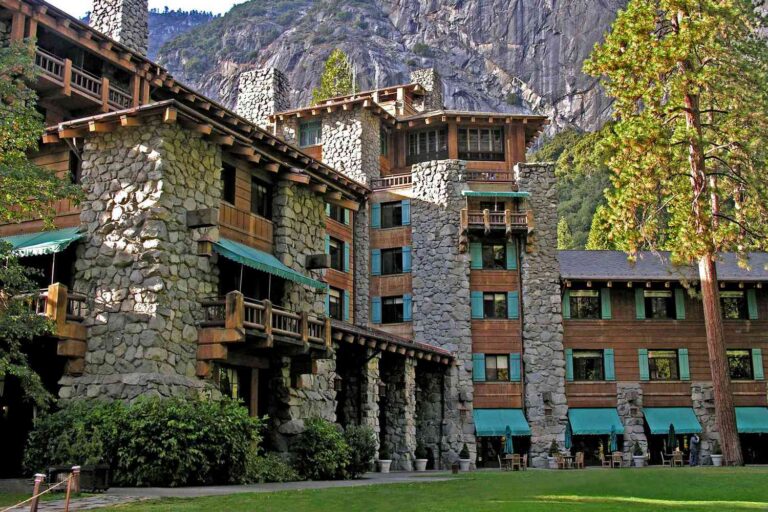
Faced with rising catastrophic wildfire threats in heavy pine forests, park forestry crews execute strategic prescribed burns and mechanical thinning around historic visitor lodging, safeguarding cultural assets and reducing fuel loads.
Planning, Cost, and Resource Dynamics
The economic viability and financial budgeting of public land administration depend heavily on balancing federal appropriations against surging visitor maintenance overheads.
-
Infrastructure Maintenance Outlays: Maintaining aging roads, wastewater treatment plants, and visitor centers across remote federal acreage requires continuous capital budgeting.
-
Visitor Management and Enforcement Costs: Deploying ranger patrols, search-and-rescue teams, and digital reservation infrastructure demands substantial operational resource allocation.
-
Opportunity Costs: Failing to adequately fund conservation staffing can result in severe resource degradation, unmaintained trails, and compromised emergency response times.
| Cost Dimension | Basic Regional Monument | Highly Visited Flagship Park | Remote Wilderness Preserve |
| Federal Funding Allocation | Moderate baseline operational budget | High budgetary priority due to national economic impact | Minimal baseline funding supplemented by specialized grants |
| Visitor Control Infrastructure | Ungated access points and small parking lots | Automated electronic toll gates and timed-entry portals | Permit-only backcountry stations and register boxes |
| Search and Rescue Overhead | Minimal local county sheriff involvement | Dedicated federal SAR teams and air ambulance coordination | Complex multi-day wilderness deployments and aviation support |
Tools, Strategies, and Support Systems
Executing successful exploration and management across federal conservation units requires integrating specialized digital platforms and administrative tools.
-
Centralized Digital Reservation Portals: Online ticketing platforms managing lottery systems, camping permits, and timed-entry vehicle passes to control crowding.
-
Geographic Information Systems (GIS) Mapping: Advanced spatial software tracking trail conditions, wildlife telemetry data, and visitor density heatmaps.
-
Real-Time Emergency Weather and Fire APIs: Meteorological feeds providing instant alerts regarding flash floods, lightning storms, and wildfire perimeters.
-
Off-Grid Mobile Trail Navigation Apps: Digital topographic applications allowing visitors to navigate remote terrain safely without cellular reception.
-
Park Partner and Non-Profit Conservancy Grants: Philanthropic funding networks supporting trail restoration, educational programs, and scientific research.
-
Automated Traffic and Parking Counter Sensors: Electronic roadside counters monitoring real-time vehicle congestion to optimize shuttle bus frequencies.
Risk Landscape and Failure Modes
Operating high-traffic public conservation lands introduces severe environmental and visitor safety vulnerabilities that require rigorous mitigation.
-
Ecosystem Destruction from Overcrowding: Excessive foot traffic trampling fragile alpine tundra, eroding trail switchbacks, and compacting soils beyond natural recovery rates.
-
Human-Wildlife Encounters and Habituation: Visitors improperly storing food or approaching large mammals like bison and bears, leading to aggressive defensive animal attacks.
-
Catastrophic Flash Flooding in Narrow Canyons: Summer monsoon storms inundating tight slot canyons without warning, trapping hikers in lethal torrents.
-
Severe High-Altitude Medical Emergencies: Unacclimatized travelers suffering acute mountain sickness or dehydration on strenuous high-elevation mountain ascents.
-
Wildfire Ignition from Negligent Campfires: Unattended campfires or discarded smoking materials sparking destructive crown fires across drought-stricken timberlands.
Governance, Maintenance, and Long-Term Adaptation
Maintaining elite preservation standards across federal park portfolios requires rigorous internal auditing and structured management cycles.
-
Annual Carrying-Capacity Reviews: Comprehensive assessments of trail erosion, wildlife population health, and visitor congestion data prior to each peak season.
-
Infrastructure Stress Audits: Systematic engineering checks of aging wastewater systems, bridges, and mountain road stability.
-
The Layered Park Resource Management Checklist:
-
Reservation System Calibration: Adjust timed-entry vehicle quotas and lottery caps based on previous year ecological impact data.
-
Trail Maintenance Sweep: Inspect high-use footpaths for drainage failures and erosion gullying following spring snowmelts.
-
Wildlife Corridor Monitoring: Verify that seasonal wildlife closure boundaries are clearly marked and actively patrolled.
-
Emergency Communications Test: Check the operational integrity of radio repeater towers and satellite emergency beacons across backcountry stations.
-
Measurement, Tracking, and Evaluation
-
Leading Indicators: Timely issuance of backcountry permits, completion of pre-season trail maintenance logs, and electronic reservation uptake rates serve as early operational signals.
-
Lagging Indicators: Total annual recreation visitor counts, search-and-rescue incident frequencies, and trail erosion severity metrics measure overall management success.
-
Documentation Standards: Maintaining an exhaustive digital archive tracking ecological research reports, visitor use statistics, and infrastructure maintenance logs.
-
Benchmarking Analysis: Regularly comparing visitor density management strategies, funding allocations, and habitat recovery rates against international conservation standards.
Common Misconceptions and Oversimplifications
-
“All federally managed public lands in the United States operate under identical national park rules.” National forests, BLM lands, and national monuments maintain distinct legal mandates that often permit hunting, grazing, and resource extraction.
-
“National parks possess infinite ecological capacity to absorb rising visitor numbers.” Fragile alpine, desert, and wetland ecosystems have strict carrying capacities where overuse causes permanent environmental damage.
-
“Visiting popular national parks requires zero advance planning or permit acquisition.” High-demand destinations increasingly rely on mandatory timed-entry passes, shuttle reservations, and lottery permits.
-
“Wild animals in national parks are domesticated and safe to approach for photographs.” Large mammals like bears, elk, and bison remain wild, unpredictable, and potentially lethal when crowded.
-
“Cellular communication and emergency rescue services are universally available in remote wilderness areas.” Deep mountain canyons and remote backcountry zones frequently lack cellular coverage, necessitating independent emergency preparedness.
-
“Wildfire suppression is the only strategy required to protect forested park ecosystems.” Modern conservation science recognizes controlled prescribed burns as vital tools for maintaining forest health and reducing catastrophic fire risks.
Ethical, Practical, and Contextual Considerations
Administering public conservation lands carries profound ethical responsibilities regarding indigenous land stewardship, historical truth, and intergenerational equity. Federal agencies increasingly collaborate with native tribal nations to incorporate traditional ecological knowledge into park management plans and interpret ancestral cultural landscapes accurately. Furthermore, ensuring equitable access for diverse socioeconomic communities remains a vital priority, balancing necessary crowd-control restrictions against the founding democratic principle that national parks belong equally to all citizens.
Conclusion
The planning, governance, and preservation of America’s protected natural treasures represent a sophisticated synthesis of ecological science, public policy, and visitor management logistics. When administrators master the complexities governing american national park destinations usa, structured operational frameworks move land agencies past reactive crowd control to achieve true environmental sustainability. Success in this specialized sector requires balancing rigorous habitat protection, infrastructure resilience, and equitable public access. Through patience and editorial rigor, stewards can protect these irreplaceable natural landscapes and guarantee enduring, inspiring wilderness experiences across generations.